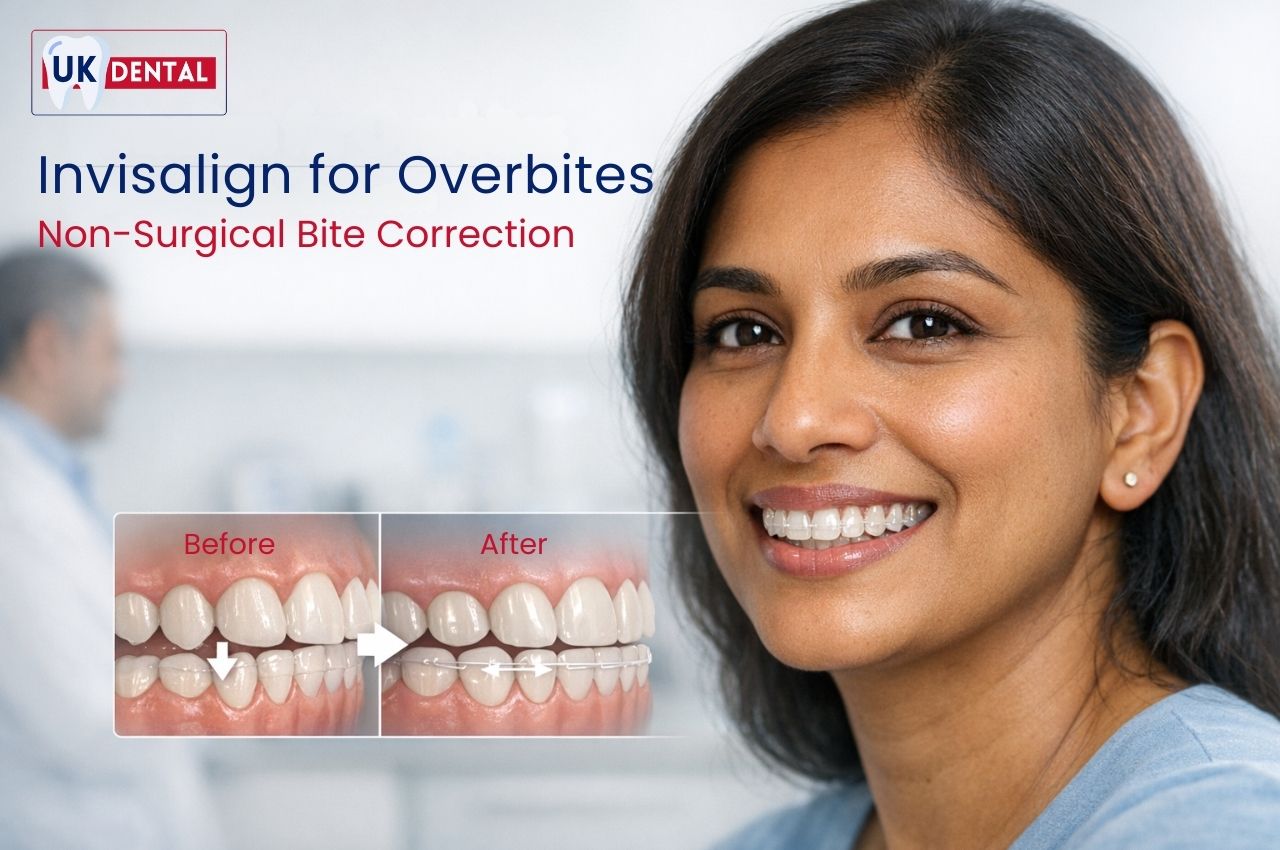

Let’s get real for a second—an overbite isn’t just about looks. Sure, the mirror might be the first place you notice it, but the real trouble shows up quietly: uneven tooth wear, jaw tension that won’t quit, speech quirks, and chewing that feels… off. Left untreated, an overbite can snowball into enamel damage, gum issues, and even chronic jaw discomfort. Yikes.
Thankfully, orthodontics isn’t stuck in the metal-mouth era anymore. We’re living in a comfort-first, tech-powered age where digital planning and discreet appliances rule the roost. And right at the center of that shift? Clear aligner therapy—especially Invisalign.
So, can Invisalign fix overbites without surgery? A complete, clinical-grade guide like this one aims to answer that question head-on. We’ll break down the science, the biomechanics, the real-world results, and the limits—without sugarcoating a thing. Whether you’re researching for yourself or advising someone else, you’re in the right place.
Understanding Overbites From an Orthodontic Perspective
Before jumping into solutions, it helps to understand the problem. An overbite occurs when the upper front teeth vertically overlap the lower front teeth more than what’s considered ideal. A little overlap is normal, but too much? That’s when trouble brews.
Orthodontists don’t treat all overbites the same way. Diagnosis matters—big time.
Common Types of Overbites
- Dental overbite:
Caused mainly by tooth position, not jaw structure. This is the most Invisalign-friendly type. - Skeletal overbite:
Rooted in jaw growth discrepancies. Think genetics, growth patterns, and bone structure. - Deep bite:
An excessive vertical overlap, often linked to muscle imbalance or overactive jaw muscles.
Each category responds differently to treatment. That’s why a precise diagnosis isn’t just helpful—it’s the cornerstone of non-surgical correction.
Invisalign Technology: How Clear Aligners Address Overbites
Now for the fun part—the tech. Invisalign isn’t just a series of plastic trays. It’s a digitally engineered system that plans tooth movement before treatment even begins. No guesswork, no crossed fingers.
Using 3D imaging and advanced software, orthodontists map out a staged sequence of movements. Each aligner applies calibrated forces to specific teeth, nudging them into place step by step.
Key Functional Advantages
- Programmable tooth movement using advanced 3D treatment planning
- Controlled intrusion and extrusion for vertical bite correction
- Optimized attachments (those tiny tooth-colored bumps) to enhance grip and directional force
- Removability, which protects oral hygiene and periodontal health
For overbite correction, aligners typically focus on:
- Intruding upper incisors
- Extruding posterior teeth
- Or quite often a smart combination of both
The exact strategy depends on bite mechanics, facial structure, and treatment goals.
Can Invisalign Fix Overbites Without Surgery? A Complete, Clinical-Grade Guide to the Truth
Short answer? Yes often.
Longer answer? It depends on the type and severity of the overbite.
Invisalign can effectively correct mild to moderate overbites without surgery, provided the issue is primarily dental rather than skeletal. When tooth position is the main culprit, aligners shine.
Conditions Where Invisalign Performs Exceptionally Well
- Mild to moderate vertical overlap
- Overbites caused mainly by tooth positioning
- Patients with stable jaw relationships
- Adults and adolescents with solid aligner compliance
In these scenarios, Invisalign delivers predictable, non-invasive results—improving both function and aesthetics without scalpels or hospital stays. Not bad, right?
Clinical Effectiveness: What Studies and Practice Show
Here’s where the evidence steps in. Clinical studies and real-world orthodontic practice consistently show high success rates for clear aligners in non-complex overbite cases.
Why does it work so well?
Because Invisalign applies lighter, staged forces, which:
- Reduce the risk of root resorption
- Support healthier bone remodeling
- Allow for steady, controlled movement
Observed Clinical Outcomes
- Improved incisal contact and balanced bite forces
- Reduced enamel wear and jaw strain
- Enhanced facial harmony and smile aesthetics
And when orthodontists combine digital planning with compliance monitoring, outcomes become even more predictable. Science plus discipline—it’s a winning combo.
Treatment Duration for Overbite Correction With Invisalign
Let’s talk timelines—because patience is part of the deal.
Treatment length varies depending on severity, biology, and (you guessed it) compliance.
Average Duration
- Mild overbite: 6–9 months
- Moderate overbite: 12–18 months
- Complex dental overbite: Up to 24 months
Wearing aligners for 20–22 hours a day isn’t just a recommendation—it’s the secret sauce. Skip hours, and you’ll likely extend treatment. No shortcuts here, folks.
Age, Bone Biology, and Treatment Predictability
Age isn’t a deal-breaker, but it does influence the pace.
- Younger patients benefit from higher bone adaptability, allowing faster correction
- Adults can still achieve excellent outcomes—movement just happens more gradually
The good news? Invisalign works across age groups when treatment plans respect biological limits. Teeth don’t care about birthdays; they care about forces and consistency.
When Invisalign Alone Is Not Enough
Alright—time for some honesty. Invisalign isn’t magic.
Severe overbites rooted in skeletal discrepancies often exceed what aligners can safely achieve.
Scenarios Requiring Alternative or Combined Approaches
- Pronounced jaw misalignment
- Significant vertical facial imbalance
- Overbites linked with airway concerns or TMJ complications
In these cases, orthodontists may suggest:
- Traditional braces
- Hybrid therapies (aligners + braces)
- Or, in select situations, surgical intervention
It’s not a failure—it’s about choosing stability over shortcuts.
The Role of Retainers After Overbite Correction
Here’s the part people love to forget—but shouldn’t.
Once teeth are moved, they’re basically rebellious teenagers wanting to go back home. Retainers keep them in line while bone and ligaments reorganize.
Retention Protocol
- Full-time wear initially (as prescribed)
- Gradual transition to nighttime wear
- Long-term use for lasting stability
Retention isn’t optional. It’s the insurance policy that protects your results—and your wallet.
Invisalign Overbite Correction: Step-by-Step Workflow
Let’s simplify the journey:
- Initial orthodontic assessment
- Digital scan & bite analysis
- Customized Invisalign treatment plan
- Sequential aligner wear
- Progress monitoring & refinements
- Overbite corrected
- Retainer phase
This structured flow keeps treatment measurable, controlled, and—most importantly—stable.
Advantages of Choosing Invisalign for Overbite Treatment
Why do so many patients prefer Invisalign? Because life doesn’t stop for braces.
- Nearly invisible appearance
- Enhanced comfort compared to brackets and wires
- No dietary restrictions (yes, popcorn lives on!)
- Easier brushing and flossing
- Digitally predictable outcomes
For professionals, students, and adults who value discretion, Invisalign is often the obvious pick.
FAQs: Real Questions, Straight Answers
Can Invisalign fix overbites without surgery permanently?
Yes—if the overbite is dental and retainers are worn as prescribed. Stability depends on retention.
Does Invisalign work for deep bites?
Mild to moderate deep bites respond well. Severe cases may need combined approaches.
Is Invisalign painful for overbite correction?
Some pressure is normal, especially with new aligners—but it’s typically milder than braces.
How do I know if my overbite is skeletal or dental?
Only a comprehensive orthodontic evaluation with imaging can determine that.
Is Invisalign worth it compared to braces?
For eligible cases, absolutely. Comfort, aesthetics, and hygiene often tip the scales.
Conclusion: The Final Clinical Perspective
So—can Invisalign fix overbites without surgery? A complete, clinical-grade guide like this wouldn’t exist if the answer weren’t a confident yes—for the right cases.
Invisalign offers a powerful, non-surgical solution for correcting mild to moderate overbites with precision, comfort, and subtlety. When guided by accurate diagnosis, thoughtful biomechanics, and expert planning, clear aligners restore bite harmony and protect long-term oral health—without invasive intervention.
That said, severe skeletal cases still demand broader solutions. There’s no one-size-fits-all in orthodontics, and that’s a good thing.
Bottom line? A comprehensive orthodontic evaluation is essential. Get the diagnosis right, respect the biology, commit to the process—and you’ll be smiling (and biting) with confidence for years to come.